Do Brooklyn Heights Walls Need Skim Coating or Spot Repairs?
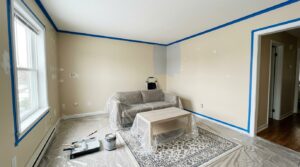
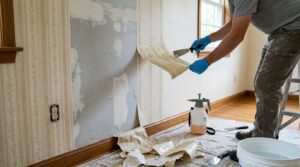
Skim coating and spot repairs answer different problems. A few isolated holes may need targeted repair; broad texture inconsistency may justify smoothing a larger surface. For Brooklyn Heights property owners, the right decision starts with the wall’s condition and the finish you expect. Neither approach should be used to disguise an active leak, unstable plaster or a moving crack.
Identify the visible problem first
Describe what bothers you about the wall. Are there nail holes, several patch outlines, repeated ridges or widespread uneven texture? These conditions do not necessarily need the same treatment. Photographs taken with light across the surface can help show what an ordinary straight-on view misses.
Avoid deciding solely because a neighbor’s renovation included skim coating. Their substrate and desired finish may be different. Look at the room as a whole and separate isolated damage from general surface inconsistency. A careful problem description helps the contractor explain why a limited repair or broader finishing scope is appropriate rather than presenting one option as automatically superior.
Understand what a skim coat can accomplish
Skim coating applies a thin finishing layer over a suitable surface to refine its appearance. Depending on the substrate and system, it can reduce visible variation from old patches or texture. It does not rebuild a structurally defective wall, stabilize every crack or solve water intrusion. Those issues require assessment before finishing.
Ask what the proposed work includes beneath the finishing layer. Cleaning, removing unstable material, repairing defects and using a compatible preparation system are separate considerations. A description that only says skim all walls may not explain how existing problems will be addressed. The surface needs to support the finish, not merely receive another layer over a hidden defect.
Recognize when spot repairs may be sufficient
Spot repairs can make sense where damage is limited and the surrounding wall texture is reasonably consistent. Small holes, isolated scuffs or a localized stable repair may not justify coating an entire room. The decision also depends on how the repaired area will blend with the intended paint finish.
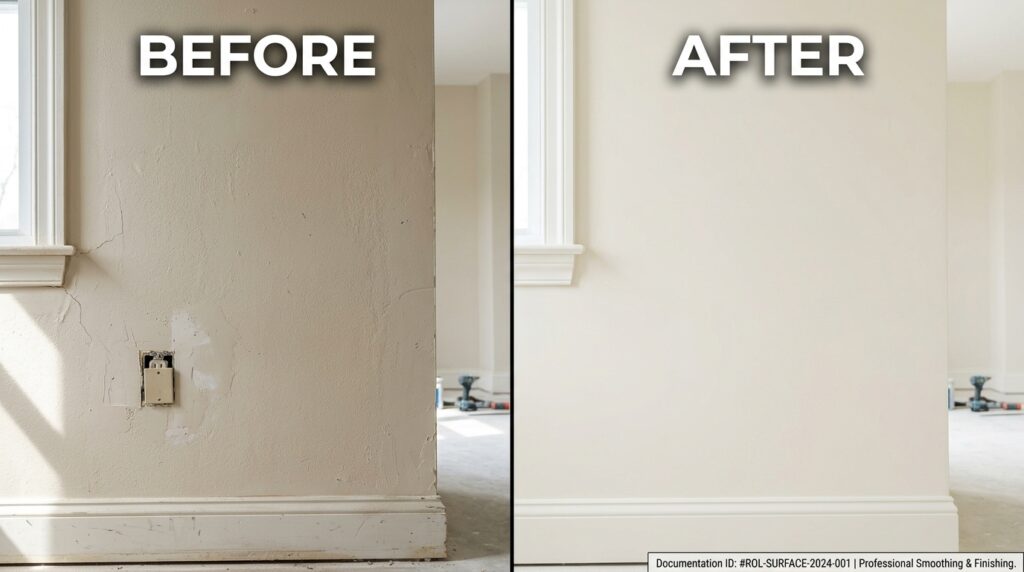
A patch can differ from the surrounding surface in both level and texture. Painting alone may not erase that difference. Ask whether blending and priming are included and whether the final sheen will emphasize the repair. A limited scope can be good value when the conditions support it, but it should not be mistaken for a promise of whole-wall uniformity.
Look for conditions that finishing cannot solve
Recurring cracks, damp areas, staining or material that appears loose should be disclosed. Their cause may lie behind the visible surface. Covering them without investigation can produce a temporary improvement followed by another failure. Ask what needs to be resolved and whether another qualified specialist is required.
Do not test unknown older coatings yourself
Older properties may contain lead-painted surfaces. Sanding or scraping can create hazardous dust. The EPA RRP program sets requirements for covered paid work disturbing paint in pre-1978 housing and child-occupied facilities. Confirm applicable safety obligations and contractor qualifications before disturbance. A decorative preparation guide is not a safe testing method for unknown materials.
 Use lighting to set the finish expectation
Grazing light travels across a wall and makes unevenness more visible. A window near the surface or a newly installed wall fixture can reveal variations that diffuse overhead lighting hides. Inspect the room under the lighting you intend to use after painting. This helps establish a meaningful preparation scope.
Paint sheen also changes how the surface reads. Reflective finishes generally make irregularities easier to see. If you plan a significant sheen change, tell the contractor before comparing repair options. The question is not whether a wall can be declared universally flawless, but what level of refinement is suitable under the room’s actual lighting and chosen finish.
Protect architectural details deliberately
Brooklyn Heights interiors can include moldings, medallions, detailed woodwork or other features worth preserving. Do not assume every older surface is historic or every irregularity should be removed. Identify the details you want retained and the boundaries of the wall work.
Where finishing meets trim, the edge treatment should be intentional. A thick buildup against a profile can change its appearance. If decorative plaster or ornamental repair is needed, confirm whether it is within the contractor’s actual scope. Wall smoothing should not silently become a promise to restore every architectural feature in the room. Separate specialist work where appropriate.
Ask how preparation fits the painting sequence
Repairs, finishing layers, drying, surface preparation and painting need an appropriate order. Product instructions and site conditions influence timing. A wall that appears dry at the surface may still need more time before subsequent work. Do not compress the sequence solely to meet an assumed one-day turnaround.
If electrical changes, trim installation or other trades are involved, coordinate them before final finishing. Cutting into a newly refined wall for an outlet can undo part of the work. Ask what condition the room must reach before smoothing begins and who is responsible for protecting completed areas. A clear handoff reduces avoidable repairs later in the renovation.
Plan room access and furniture protection
Surface preparation affects room use as well as appearance. Tell the contractor what furniture remains, where belongings can be stored and which circulation routes must stay available. Apartment management may impose work-hour, delivery or common-area requirements. Obtain those rules before final scheduling.
Dust management and occupant protection should be discussed in the context of the actual work and safety requirements. Avoid assuming that a phrase such as dust-free guarantees no disturbance. Ask what measures are proposed and what preparation you need to complete. Accurate expectations are more useful than an absolute marketing claim that cannot describe every substrate or method.
Compare estimates by extent and assumptions
A quote for spot repairs and one for full-wall skim coating are not the same scope. Identify the wall areas, substrate assumptions, treatment of cracks and preparation before paint. Ask whether ceilings, corners and areas behind fixtures are included. Exclusions should be clear enough to understand before work starts.
If underlying material is found to be unstable, ask how additional work will be approved and priced. A low estimate that assumes sound surfaces may change after closer assessment. Compare the reasoning behind the options, not only the totals. The most suitable proposal should connect observed conditions to a realistic finish expectation and a defined preparation method.
Inspect the completed surface in context
Evaluate the result with ordinary room lighting and the agreed finish expectation. Keep in mind that substrate repair and paint application are related but different stages. A surface may be ready for painting without yet showing the final color or sheen. Discuss the appropriate inspection points in advance.
After painting, keep the product specification and any relevant care guidance. If a crack returns, document it and ask about the underlying cause rather than assuming another cosmetic layer will solve it. A good preparation decision is grounded in the wall’s condition, not a belief that one technique eliminates every future issue.
A wall-assessment brief for your estimate
Photograph one broad view of each wall and a close view of the defects. Add a side-light image where possible. Mark the areas you want refined and the moldings or details that should remain unchanged. Include previous repair history and any known leak or movement issue.
State the intended color and sheen if already selected. If fixtures will change, send the lighting plan or explain the new positions. Note furniture, room-use restrictions and building access requirements.
Ask ROL Remodeling to discuss whether spot repairs or broader smoothing fits your Brooklyn Heights property. Request a written scope identifying what is included before painting and what conditions require separate investigation. Confirm actual address availability and any specialist repair requirements before scheduling.
An illustrative wall-preparation decision
Imagine a Brooklyn Heights room with a few isolated nail holes on one wall and extensive patch outlines on another. Requiring full-room skim coating without assessment may overlook a simpler suitable repair for the first surface. Requiring spot repair everywhere may leave the broader texture variation unresolved on the second.
The owner plans a wall fixture that will cast light across the more uneven surface. That information should be included before comparing the two preparation approaches. Any recurring crack or damp area requires a separate discussion about cause, not merely a thicker finishing layer.
This is a planning example, not a reported ROL repair. It shows why the room may need a differentiated scope. A shared desire for smooth walls does not make all defects equivalent or guarantee that one surface technique will solve every problem.
Discuss the project with ROL Remodeling
For a property-specific conversation, review skim coating in Brooklyn Heights and our broader coverage information. Send your address, photographs and goals through the project estimate form. Confirm the service scope and current availability before scheduling.