
High-Gloss Paint in Manhasset Homes: Preparation, Light and Cure Time
High-gloss paint is not simply ordinary paint with extra shine. It changes how a surface reflects light, how details appear and how visible defects become. In a Manhasset home, gloss can highlight doors, trim or a carefully selected feature, but it needs a precise brief. Preparation, coating compatibility and cure time are as important as the final color.
Distinguish sheen from coating type
High gloss describes appearance, not a single material. Different coatings can produce reflective finishes while having different substrate requirements, application methods and cure schedules. Terms such as lacquer-like may describe an intended look without identifying the actual product. Ask what coating system is proposed.
That distinction matters for occupied interiors. Product instructions, ventilation requirements and the method of application need to suit the project. Do not assume that a brush-applied coating and a sprayed system are equivalent because both photographs look shiny. Compare the actual finish, preparation and practical implications before selecting the system for your doors or trim.
Expect reflections to reveal the substrate
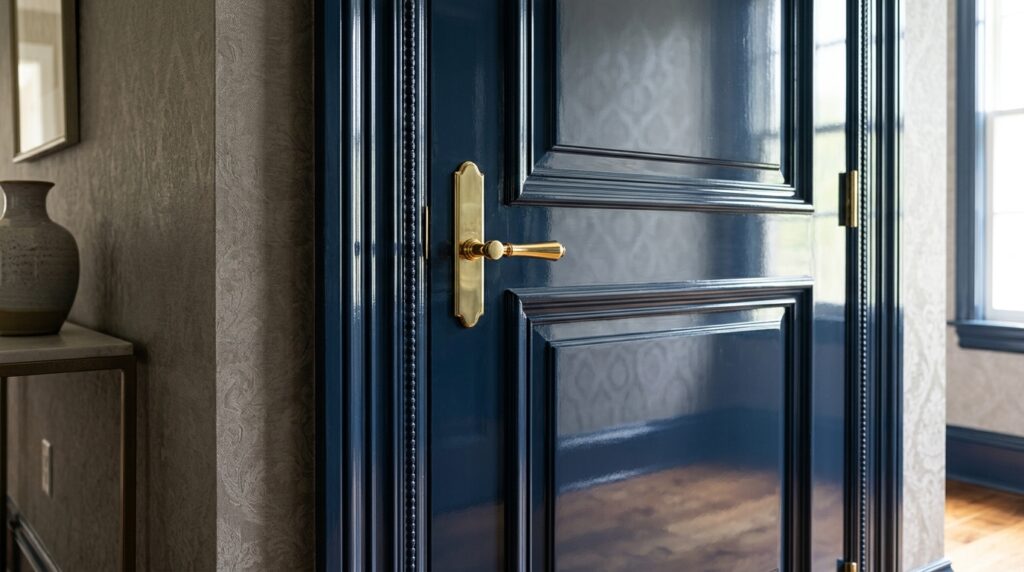
A reflective finish can make shallow dents, uneven patches and old brush marks more apparent. The light creates highlights and shadows that a flatter coating may soften. Examine the surface from an angle before deciding what preparation is needed. A straight-on photograph can miss the defects that gloss will emphasize.
Set a realistic preparation scope
Ask whether existing texture will remain, whether broad smoothing is included and how damaged edges will be treated. A high-gloss request does not automatically include rebuilding the surface. If the preparation is limited to minor repairs, understand what imperfections may still be visible. The estimate should connect the agreed preparation to the expected result.
Check adhesion and existing coatings
The new system needs a clean, stable and compatible base. Grease, wax, loose paint and an unsuitable existing finish can interfere with adhesion. Product instructions determine the correct preparation and primer. A blanket statement that new gloss can go over anything is not a meaningful specification.
If the current coating is unknown, disclose that rather than guessing. In older homes, painted components may also need a lead-safe assessment before disturbance. Do not sand unknown paint to test how quickly it comes off. Confirm appropriate qualifications and work practices with the contractor. A safety assessment and a decorative finish decision are separate responsibilities.
Choose where gloss belongs
Door panels and detailed trim can benefit from controlled reflections, while a large wall may create a much stronger visual effect. Consider the amount of gloss already present in stone, glass, metal and furnishings. Additional reflections can either tie the room together or make it feel visually busy.
Use architecture to define the scope. An entry door, built-in element or molding profile may provide a clear focal point without covering every surface. If a wall is the target, review the finish from ordinary seating positions and under the planned lighting. Gloss should be an intentional design choice, not an automatic upgrade applied wherever possible.
Sample color and reflectivity together
A color approved in a matte sample may read differently when finished in high gloss. Reflected light can alter the impression of depth and contrast. Review a sample in the intended sheen, not only a flat color card. Place it beside the materials that will remain in the room.
Manhasset homeowners planning around cabinetry or stone should include those finishes in the comparison. Look at the sample during daylight and with normal evening fixtures. A dramatic studio image can conceal distracting reflections that appear in a real room. The sample should help you choose the actual relationship between color, light and surface—not merely a color name.
Include moving parts in the scope
Doors, drawers and windows introduce practical questions that a stationary feature wall does not. Existing paint buildup can affect operation. Hardware, hinges, seals and contact points need consideration before coating. Clarify which parts will be removed, protected or excluded and who handles any necessary adjustments.
Do not assume that every painted surface can be closed tightly as soon as it feels dry. Contact pressure can mark or stick coatings before adequate curing. Ask for the chosen product’s guidance and a realistic return-to-use plan. If a main entrance or frequently used room depends on the component, explain that constraint during the estimate discussion.
Separate drying, recoating and curing
Dry-to-touch, ready for another coat and ready for normal use are different milestones. Temperature, humidity and product formulation can influence timing. A finish may look complete while still being vulnerable to heavy contact or cleaning. Follow the actual technical instructions rather than a generic overnight rule.
Discuss the room’s conditions and whether the project overlaps with other trades. Dust, handling or fixture installation after painting can affect a new finish. Protecting the completed surface should be coordinated in the sequence. A schedule that allows no time for curing may create avoidable damage even when the application itself was careful.
 Compare proposals by finish expectations
High-gloss proposals should identify the coated components, preparation assumptions, coating system and intended appearance. Ask how sample approval is handled and what exclusions apply. A price without those details cannot tell you whether two contractors are offering the same result.
Avoid adopting another business’s rate as the expected price for your Manhasset property. The amount of detailed trim, surface condition and access can alter the scope substantially. If the budget is limited, prioritize the surfaces where gloss adds the most value. Reducing area is often a clearer decision than quietly reducing preparation while expecting the same appearance.
Plan maintenance around the selected product
Cleaning instructions are coating-specific. Wait for the stated cure period, use appropriate products and avoid abrasive methods unless expressly permitted. A hard-looking shine does not mean a new coating is ready for vigorous scrubbing. Obtain the care guidance at handover rather than discovering it after a mark appears.
Touch-ups can be noticeable because sheen and reflected light reveal small differences. Keep the product and color specification for future reference. If damage occurs, ask about the appropriate repair extent rather than applying an unrelated glossy paint. Maintaining a coherent reflective surface may require a broader repair than the size of the visible mark suggests.
Make approval about the whole component
A polished sample does not resolve every question about a complete door or molding run. Examine edges, profiles, joints and the relationship to adjacent finishes. Decide what appearance is acceptable under ordinary room lighting. The goal is a documented expectation, not a claim of perfection under every possible inspection condition.
Before scheduling, identify any operation problems, loose components or underlying repairs that painting will not solve. Coordinate those first. A beautifully coated door that does not close properly is not a successful outcome. Bringing practical use into the finish discussion helps the project serve the home rather than only the photograph.
A high-gloss project checklist
List each proposed door, trim run or feature surface. Add photographs taken straight on and at an angle, and note the current coating if known. Identify worn edges, dents and operational problems separately so they are not mistaken for routine painting.
Write the intended effect: subtle architectural highlight, dramatic entry or reflective accent. Compare that goal with the room’s existing stone, metal and glass. Ask whether a sample can demonstrate both the selected color and sheen.
For an occupied home, identify which components must stay usable and when other trades will handle the area. Discuss curing and safe return to use before agreeing to a schedule.
Contact ROL Remodeling with your Manhasset address and this surface list. Request a project estimate that explains the preparation and coating system. Confirm nearby Great Neck or Roslyn coverage individually; a town page does not establish a guaranteed distance-based service radius.
An illustrative glossy-door decision
Consider a Manhasset door with several shallow dents and old brush texture. The owner wants a dramatic glossy color. Selecting the coating first could leave the preparation expectation unclear: a routine repaint and a broader refinement of the faces would not necessarily produce the same appearance under reflected light.
The door is also needed daily. Its hardware and contact edges require a practical discussion, and the coating’s return-to-use guidance must fit the household. A dry-looking surface should not be assumed ready for tight contact or cleaning immediately.
This hypothetical decision does not represent a ROL project or completion promise. It illustrates how gloss connects decoration to function. Define the included refinement, actual product, component operation and curing expectations together rather than treating shine as a simple material upgrade.
Discuss the project with ROL Remodeling
For a property-specific conversation, review high-gloss painting in Manhasset and our broader coverage information. Send your address, photographs and goals through the project estimate form. Confirm the service scope and current availability before scheduling.